
GTA 6's Biggest Gameplay Reveals From Edge Magazine — Criminal Profile, Weather, and More
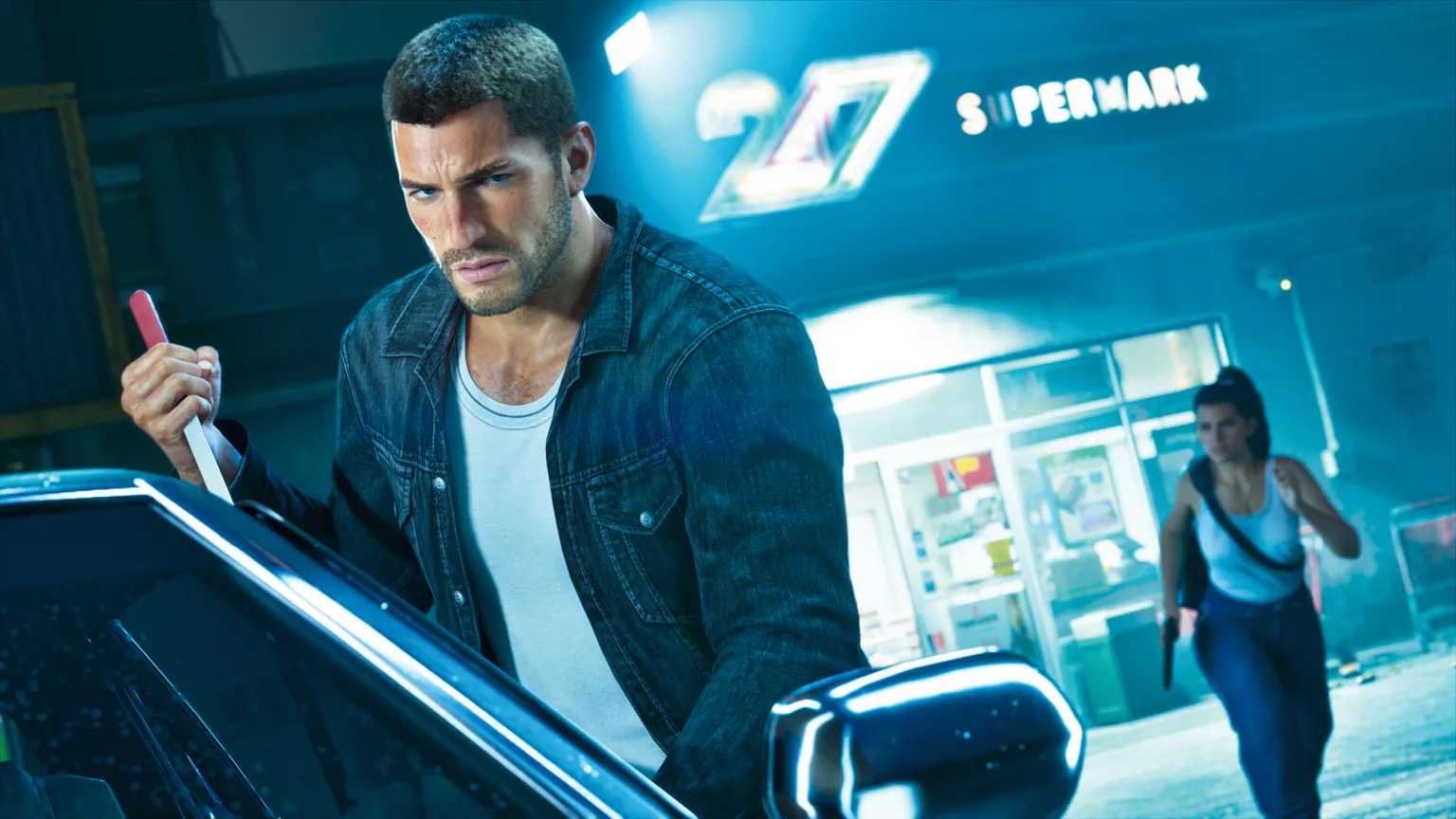
Note: This article covers officially revealed GTA 6 details from Edge Magazine's November 2026 cover story. No leaked content is discussed.
If you've been searching for the GTA 6 Edge magazine cover story, the November 2026 issue is the one worth your time. It's built on something no previous preview managed: a 90-minute, on-the-record gameplay session in which Rob Nelson, co-studio head of Rockstar North, played the game openly and talked through what was happening on screen, from world systems to small details. The piece packs more GTA 6 gameplay details into one place than anything published before it — world design, NPC behavior, criminal tracking, police logic, weather, vehicles, and transport, all covered in depth. Below, each system gets its own section, so you can skim straight to whatever you care about most.
The issue lands alongside Rockstar's biggest asset drop of the season, too — we covered every image, theme by theme, in 12 new screenshots breakdown.
The Map: Twice the Size, Far More Dense
Plenty of people searching for GTA 6 Edge magazine screenshots have already clocked the scale: the map is roughly twice the size of GTA V's, and the total landmass comes close to the combined worlds of GTA IV, GTA V, and Red Dead Redemption 2. But Rockstar's point, as the session made clear, is that scale was never the real story — density is, and it changes how the world feels minute to minute. The studio says the game contains one order of magnitude more interiors than previous entries, and that every back alley is built with the same level of detail as the main streets. Teams of architects and artists constructed interiors in layers, so spaces were furnished, cluttered, and personalized on top of the raw architecture rather than left as bare sets. That's why houses feel genuinely lived-in: photographs on the walls, possessions on the tables, and rooms with the kind of realistic disorder real homes accumulate, so that even a glance through a window tells a small story.
A Pedestrian System with Memory and Attitude
To make its population feel individually realised, Rockstar established an entire Los Angeles-based team of writers, directors, and producers dedicated to NPC life in Leonida — a level of investment studios usually reserve for main characters. Every pedestrian was art-directed, and the game ships with around 600,000 animations to give them believable movement, reactions, and body language. Each NPC carries personality traits — temperament, aggression, and a memory of how you have behaved toward them — and those traits determine how they respond to the player. That memory element matters more than it sounds: how you treat people sticks, and the world reacts to the player you've actually been, not to a generic protagonist who resets between encounters. Districts also have their own demographic and professional textures, so a crowd in one part of the map doesn't look or feel like a crowd in another — and if a pedestrian decides you've been staring a little too long, they may square up to you, or release their dog.
The Criminal Profile System: Professional to Irredeemable
One of the quiet standouts is the GTA 6 Criminal Profile system. It tracks Jason and Lucia's behavior on a scale running from "Professional" to "Irredeemable," represented on screen by angel and devil icons. Combat doesn't always have to end in death, because the system distinguishes between approaches — a calculating criminal might incapacitate rather than kill, and the profile registers the difference. The measurement is continuous, too: how you act across the whole game is what counts, not isolated mission outcomes, which means two players can play the same story and finish with very different profiles, depending on the choices they made along the way. Rockstar says the system will influence how Jason and Lucia's story unfolds, which turns it into a genuine narrative device rather than a cosmetic meter — and it gives players a reason to think twice before pulling the trigger.
The Relationship System — and the Marriage Question
Jason and Lucia's closeness is measured on a four-point relationship scale, and it increases when they spend time together. That means walks on the beach, cycling, working out at the gym once they've purchased a membership, or simply driving around Leonida with nothing pressing to do. The activities are deliberately ordinary — the point is time together, and the game treats that time as meaningful rather than filler. Rockstar says the system affects the story, and that the player can define the closeness and intimacy of the relationship — and possibly its legal status. Asked directly whether the couple can marry, Nelson declined to confirm or deny — which, from a studio this protective of its story, is at least an answer of sorts.
The Police "Heat" System: What They Know, Not What You Did
The GTA 6 police heat system is built around what the world knows about you. It tracks the information law enforcement has actually gathered: your physical description, whether you were working alone or with a partner, what you were wearing, whether CCTV captured you, and what weapon you were carrying. Those details appear as icons on screen — a visual representation of the police report you're trying to outrun, updated as the world learns more about you or loses track. Get caught on camera in a distinctive outfit carrying a specific weapon, and that's exactly what the report says about you, until you do something that makes it say something else. Change clothes, drop the weapon, or split up from your partner — each action removes a piece of identifying information from the description police are working from.
A Weather System That Actually Moves
The GTA 6 dynamic weather system abandons the preset conditions of earlier games for something far more granular. Cloud systems move independently, shaped by wind, humidity, fog, time of day, and season. Because conditions evolve on their own, you can see a storm forming in the distance and watch it approach in real time, instead of weather simply switching presets around you. The aftermath behaves believably as well: roads become wet, buildings drip once the storm passes, and surfaces dry at different rates, so the world carries evidence of the weather long after the sky clears. Wind drives trees, clouds, and waves — and storms can buffet aircraft, even dealing light damage to a player who stays inside severe conditions for too long.
Vehicles: Fuel Gauges, Trackers, and Two Useful Apps
Every vehicle now has a fuel gauge and an engine health readout. You can drive a long distance before needing fuel, but refilling is genuinely part of the game loop rather than a forgotten chore, and the readouts make long drives across the map feel like small logistical decisions. Theft is riskier than it used to be: some drivers panic and flee, others may be armed, and a newer, expensive car can contain a tracker that broadcasts your position. Two in-game apps extend the loop further — "Scooter Bros" summons your own vehicle to your location for a fee, with your weapons stored in the boot, while "WAINK" lists vehicles wanted by fences, including their security features and tracking capabilities. Taken together, fuel, engine health, trackers, and the fence economy make vehicles a system with real risks and trade-offs rather than a free spawn menu.
Buses and Trains That Actually Run
Public transport is fully functioning, with bus and train systems you can actually ride. Phil Hooker, one of Rockstar's heads of development, admits he spends much of his time waiting for buses and riding them across Leonida to watch the world pass by. It's a small detail, but it's exactly the kind of system that makes a world feel alive — the city keeps moving whether you're part of it or not.
Narrower Roads, Longer Nights
GTA V's wide roads and highways have been narrowed in GTA VI to what Nelson describes as "a more believable size." The day-night cycle has been extended significantly as well — sunsets linger, and nights stretch longer. Rockstar landed on the new timing after testing the game with GTA V's clock, which made everything feel "too fast" at the new level of fidelity. Slower light and narrower streets are pacing decisions as much as visual ones, and they change how the world registers as you move through it.
Sam Houser's Role
Rockstar president Sam Houser remains integrally involved in every aspect of the game's creative development, even this close to release. According to Nelson, Houser helps shape the game's direction, discusses map layout with co-studio head Aaron Garbut, develops characters and story elements, and takes part in major creative decisions. He and Nelson also regularly play the game together, identifying problems and opportunities for improvement. Whatever else changes between now and launch, creative direction at the very top is still clearly hands-on.
How Development Actually Works
Rockstar works in roughly six-to-eight-week milestones, concentrating on discrete areas before stabilizing a build and playing it intensively. A smaller group then evaluates the game holistically and produces "thousands and thousands" of notes, which feed directly into the next milestone. Rather than working from a fixed document, the team found that "the game tells you what it needs." After ten years of development, the impression the preview leaves is of a world made by a single set of hands, tuned through iteration rather than assembled from a plan.
Why This Matters
This is the most detailed hands-on preview of GTA VI published before launch. It confirms that Rockstar hasn't just built a bigger map — it's built a deeper simulation, where every system interacts with every other, and it's the clearest answer yet to what's actually different from GTA V. If you're deciding which GTA 6 Edge magazine issue is worth tracking down before release, it's this one.
A Faster Way to Keep Up with GTA 6
One practical note before you go: there's more GTA VI coverage than anyone can actually watch. Try Lumiexi for free to make it manageable — paste a YouTube video URL and its transcript, get a summary in seconds. Multiple formats available.
Frequently Asked Questions
What is the GTA 6 Criminal Profile?
A system that tracks Jason and Lucia's behavior on a scale from "Professional" to "Irredeemable" — affecting how the story unfolds.
Does GTA 6 have a relationship system?
Yes — Jason and Lucia's closeness is measured on a four-point scale. Spending time together increases it.
How does the GTA 6 police system work?
Police track your description, clothing, weapon, and whether CCTV captured you. Changing clothes, dropping weapons, or splitting up from your partner removes identifying information.
How big is the GTA 6 map?
Roughly twice the size of GTA V's, with a total landmass nearly as large as GTA IV, GTA V, and Red Dead Redemption 2 combined.
Want the fast version yourself? Summarize your first YouTube video — paste a YouTube video URL and its transcript, and get a clean summary in seconds.
